


The Federal Reserve governor invokes a “long and painful” history of private money to justify tighter supervision over the $200 billion market.
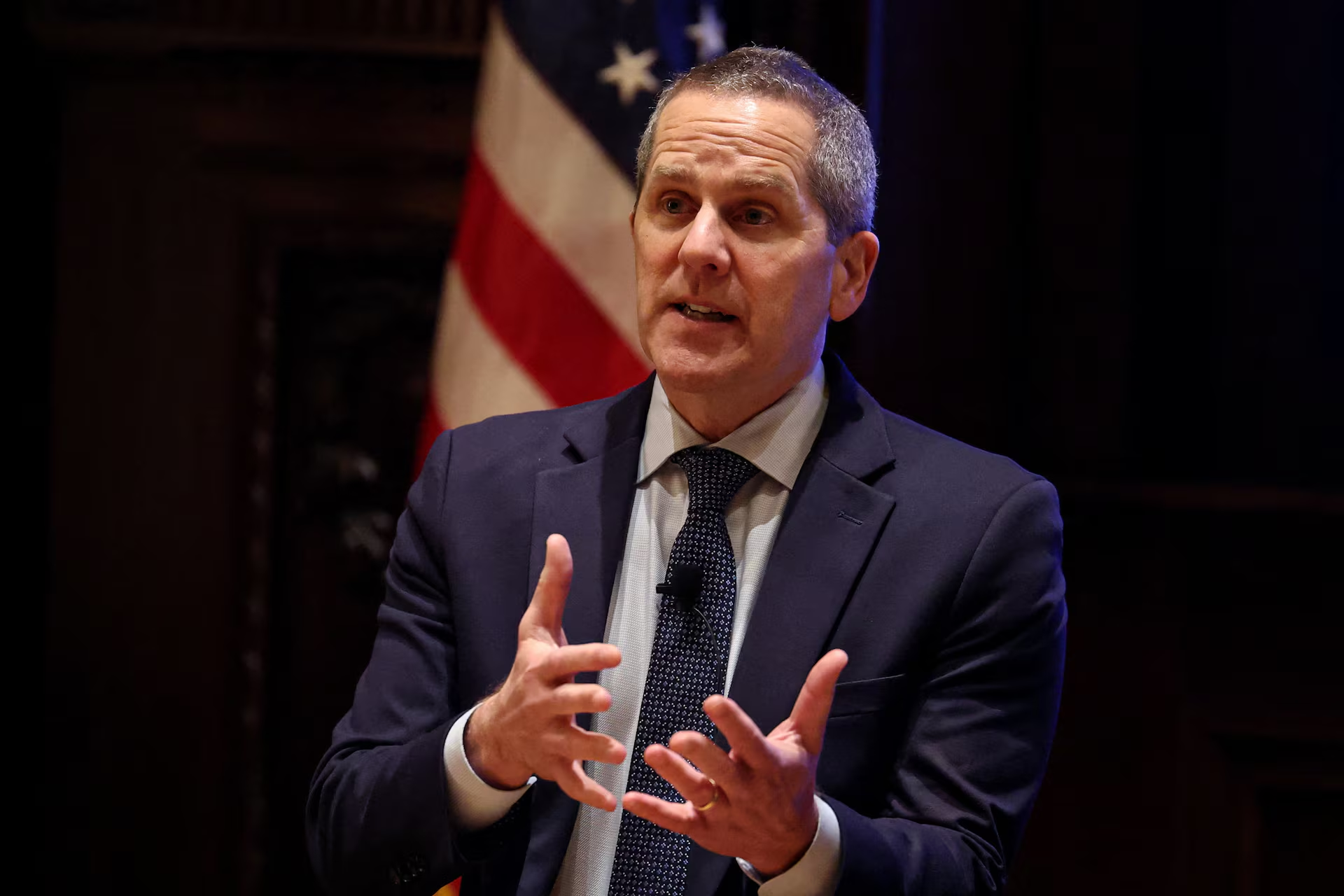
Federal Reserve Governor Michael Barr delivered on March 31, 2026, the harshest remarks ever made by a Fed official on stablecoins, invoking a “long and painful history of private money created with insufficient safeguards” to justify aggressive supervision under the GENIUS Act, the federal stablecoin law signed in July 2025. His remarks strike directly at the two largest issuers in a $200 billion market – Tether and Circle – and signal that the regulatory implementation phase will be stricter than the law’s passage had suggested.
Barr articulated his central warning with precision: “Stablecoins will only be stable if they can be reliably and promptly redeemed at par across a wide range of conditions, including market stress situations that can pressure the value of otherwise liquid government debt and during episodes of strain on the individual issuer or its related entities.” The reference to March 2020 – when even U.S. Treasuries came under acute liquidity pressure – is explicit and undermines the assumption that government bond reserves are automatically safe in any scenario.
To frame the risk, Barr invoked three precise historical precedents: the free banking era of the 19th century, when private banknotes traded at a discount and bank failures wiped out depositors; the money market fund runs of 2008 and 2020; and the collapse of TerraUSD in 2022, which erased $40 billion in a matter of weeks.
The GENIUS Act requires issuers to publish reserve disclosures monthly, restrict reserve assets to high-quality liquid instruments such as short-term Treasuries, disclose the absence of FDIC coverage, and comply with banking requirements on capital, liquidity, and anti-money laundering. Barr is now focused on the next phase: he wants a narrow definition of “safe assets,” stricter rules to prevent issuers from shifting to jurisdictions with weaker standards, capital requirements calibrated to real redemption risk, and limits on issuers’ collateral activities to reduce contagion risk.
The governor also explicitly named the incentive problem: “Widening the boundaries of permitted reserve assets can boost profits in favorable times, but risks a crack in confidence during the inevitable periods of market stress.” This framing is a preemptive argument against any industry lobbying aimed at expanding the list of permitted assets during the rulemaking phase, now underway at the Fed and the FDIC.