



Treasury Secretary Scott Bessent confirmed that the Trump administration will never introduce a central bank digital currency.
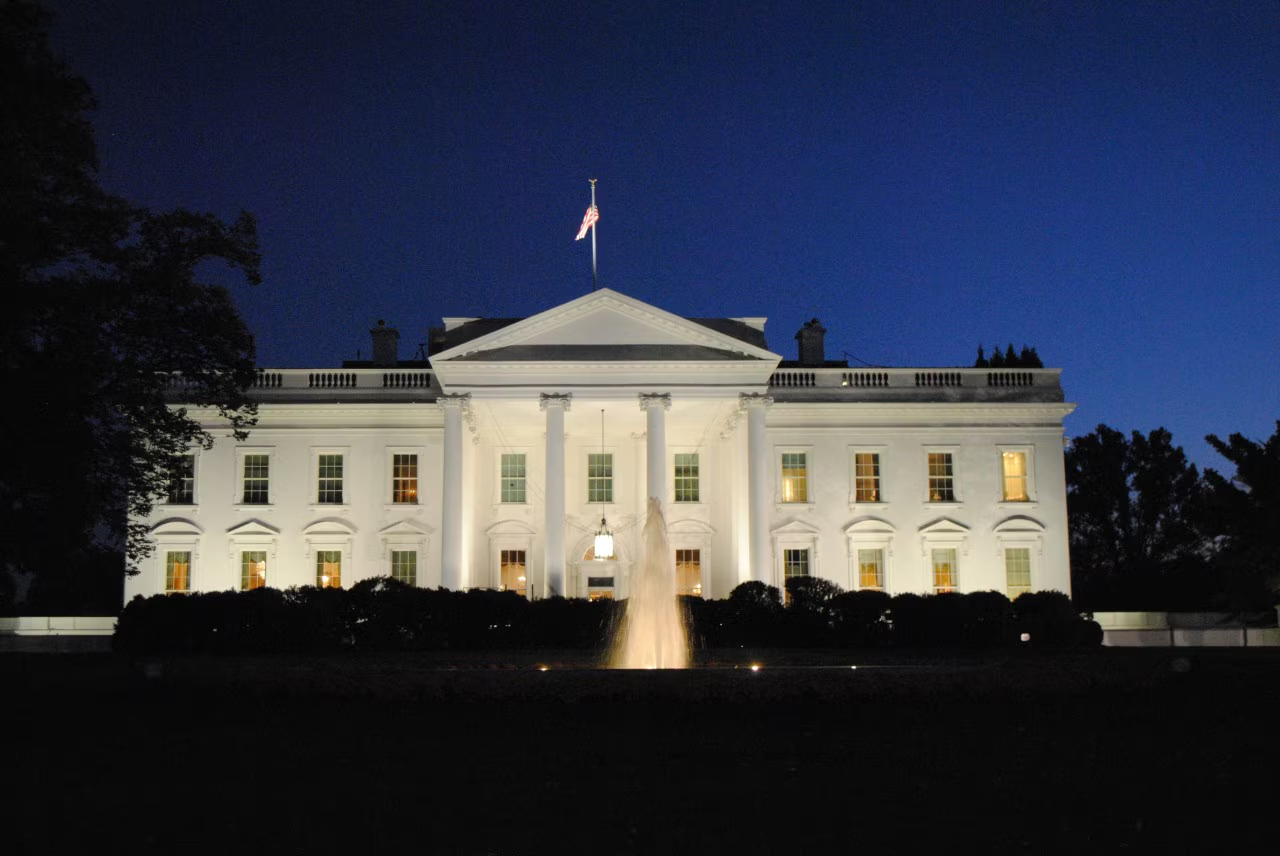
United States Treasury Secretary Scott Bessent reiterated, during a White House press conference on Thursday, May 28, 2026, that the current administration will never allow the introduction of a CBDC – a digital currency issued and directly regulated by the central bank. Bessent also urged Congress to complete the legislative process for the Clarity Act.
“This administration has been very clear: there will be no central bank digital currency, which I believe would be the first step toward transaction surveillance, so we have taken it off the table,” Bessent stated, during a press conference. “The most important thing we can do is make sure digital assets come to the United States.”
Bessent had already expressed a similar position during his Senate confirmation hearing in January 2025, stating that he saw “no reason” for a U.S. CBDC and adding that it is a tool suited only to countries lacking investment alternatives. Numerous Republican lawmakers have historically opposed the idea, arguing that it could open the door to government surveillance of citizens’ financial transactions.
At the same press conference, the Treasury Secretary cited the recent passage with bipartisan support of the GENIUS Act – the stablecoin legislation – as a positive signal for the sector. He then explicitly called on the House and Senate to accelerate work on the Clarity Act, the legislation aimed at establishing clear rules for the digital asset market. “All the chaos you read about happens because we are in the offshore wild west, so we need to bring it onshore,” Bessent added.
The Clarity Act passed the Senate Banking Committee in early May, following multiple delays caused by tensions between U.S. banking lobbies and crypto advocates, particularly regarding stablecoin interest and the ethical language of the text. Analysts, however, remain cautious about the bill’s prospects. Jaret Seiberg, managing director of TD Cowen’s Washington Research Group, wrote in a note this week that the bill would need conflict-of-interest rules applicable to the President of the United States in order to gain sufficient Democratic support and pass the final vote.